
Hi Beatz: Music & Rhythm Game
Fun Tap XMusic
4.5949.00 Reviews
- Version
- 0.2.7
- Installs
- 500.00K
- Age Rating
- Teen
Screenshots
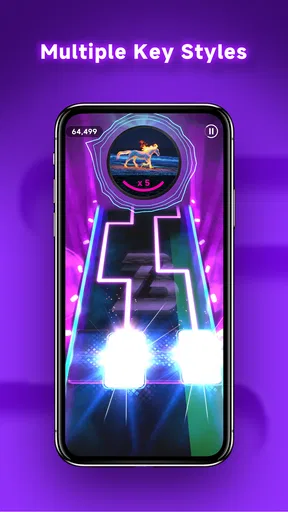
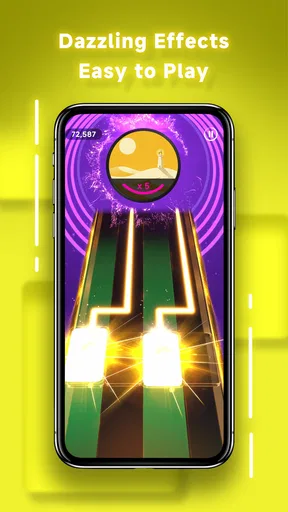
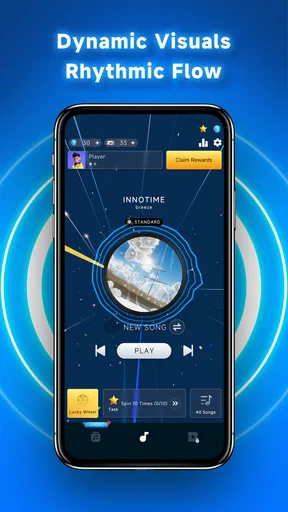
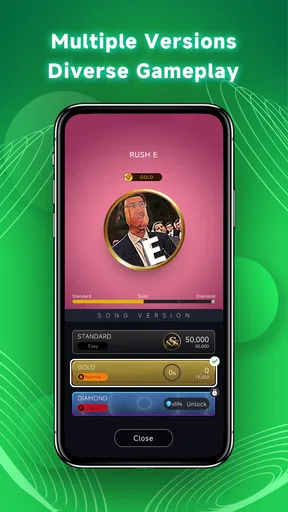
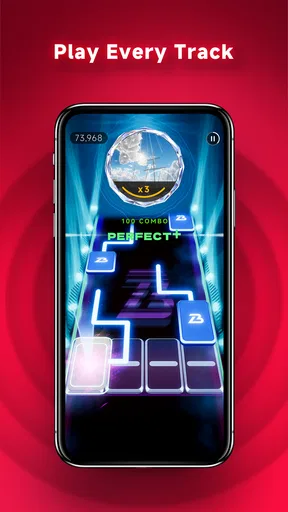
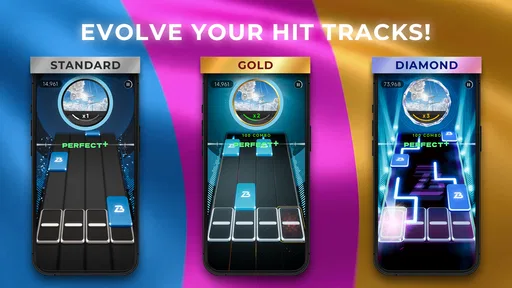
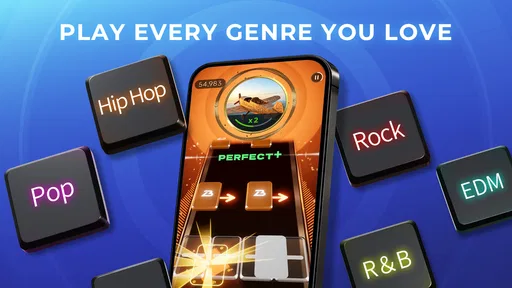
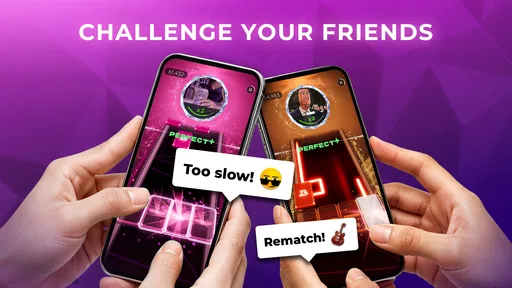
Our Review of Hi Beatz: Music & Rhythm Game
 Analysis by Appyee
I found Hi Beatz: Music & Rhythm Game most interesting as a quick, shared-device music game rather than as a serious rhythm-training tool. The idea is easy to understand: tap along with songs, keep your timing steady, and work toward upgrading tracks to Diamond. That simplicity makes it approachable when someone in the household has a few spare minutes, but it also means the experience depends heavily on whether you enjoy repeating songs and chasing cleaner runs.
Fun Tap X presents it as a free music game for Android, with a Teen content rating and support beginning with Android 8.0. It has reached over one hundred thousand installs and holds a 4.8 average from roughly eight thousand ratings, which suggests that the basic tap-and-beat formula is connecting with a sizeable audience. I would still treat those numbers as a starting point rather than a guarantee: rhythm games can feel completely different depending on your phone, your preferred music, and how tolerant you are of repetition.
How Hi Beatz fits into a shared household
I’d treat a shared copy as a casual turn-taking game, not as a reliable way to keep several people’s progress separate. In my experience, it works best when everyone agrees that the phone owner controls the session and each player gets a short, clearly defined turn; that keeps a quick challenge from becoming a dispute over who changed a track or used the device too long.
A game that works well in short turns
In my experience, the strongest household use case is passing the phone around for brief attempts. One person can try a song, another can immediately take a turn, and everyone understands the objective without a long explanation. The Diamond goal gives each attempt a clear purpose, so a casual player does not need to learn a complicated story or a large set of menus before getting involved.
That makes it a natural choice for a waiting room, a short break, or an evening when people want something interactive without committing to a long multiplayer session. I can imagine one family member trying to improve a difficult section while someone else watches the timing and comments on the result. The game’s appeal in that setting comes from quick comparison: who can stay on beat, who can recover after a mistake, and who can push a track closer to Diamond?
The limitation is equally important. This is not the same as a shared music player or a party game built around several simultaneous players. The practical household format is taking turns on one device, not assuming that everybody is playing at once. If your group specifically wants cooperative play, a large-screen experience, or a game where everyone has a role, a different music title will probably be a better match.
A realistic everyday session
Picture a teenager using the game after school while a parent is preparing dinner. The first attempt is mostly about understanding the song’s rhythm. The second is about avoiding the same missed taps. A sibling then tries the track and may discover that a different hand position feels more comfortable. After a few turns, the group has a small, informal challenge: reach a better result without turning the session into a serious competition.
That scenario works because the central action is immediately visible. Nobody needs a lengthy tutorial from another player. However, I would keep the sound level considerate in a shared room and avoid assuming that the music will suit everybody. A rhythm game can be socially engaging when the household likes the selected tracks, but less enjoyable when one person controls the device and everyone else is simply waiting.
Why the Diamond target matters
The upgrade-to-Diamond structure gives the game more staying power than a simple tap once and forget it app. It encourages a useful rhythm-game habit: instead of moving on after a mediocre result, I can replay the same track and focus on one weakness. Maybe my taps are early during a fast passage, or perhaps I lose concentration near the end. Replaying with one specific correction in mind is more productive than tapping randomly and hoping for improvement.
For shared use, this also creates a fairer way to compare attempts. A beginner may not beat an experienced player immediately, but they can still measure progress against their own previous result. I would recommend agreeing on the goal before starting: highest result, most improved attempt, or simply the funniest mistake. That small distinction prevents the strongest player from dominating every turn.
Setup boundaries, coordination, and trust
Before handing over the device, I’d make the household rules practical rather than complicated: decide who can play, who handles purchase decisions, and whether a serious attempt gets a quiet, uninterrupted minute. That matters especially when a phone is shared for more than games, because interruptions can spoil a run and payment access belongs with the owner. With those boundaries clear, it’s easier to judge how the game fits alongside other music choices.
What to decide before handing over the phone
Because the game is free to download, it is easy to start casually. The more important preparation is not technical; it is agreeing on how the shared device will be used. I would decide who is playing, how long each turn lasts, and whether purchases are allowed before giving the phone to a child or another household member.
Hi Beatz includes in-app purchases ranging from forty-nine cents to nearly one hundred dollars per item. That is the detail I would take most seriously in a shared-device situation. A free download does not automatically mean a completely cost-free experience, so the device owner should handle purchase decisions directly. I would not leave payment choices to an unsupervised player, especially when several people use the same phone or tablet.
The safest household routine is simple: the owner installs the game, checks the purchase setup on the device, and keeps buying decisions separate from ordinary play. I am not assuming that the game provides family controls or account restrictions; those depend on the platform and the device configuration. The practical lesson is to use the operating system’s own purchase protections where appropriate and to make the household rule clear.
Account boundaries deserve attention
Shared play can blur personal progress. If several people use one installation, a Diamond upgrade may represent one player’s work while another person assumes it is theirs. That is not a problem for a casual pass-and-play session, but it becomes frustrating when somebody is trying to build a personal record.
I would handle this by assigning informal turn ownership. One player can work on selected tracks during a session, while another chooses a different track or keeps a simple note of which song they are improving. This is not as convenient as separate profiles, and I would not assume that the game offers them. If personal progression and private records are essential, a shared device may not be the right arrangement.
The same boundary applies to interruptions. A phone call, notification, or accidental swipe can ruin a rhythm attempt, and the player may feel that the result was unfair. Before a serious run, I would give the player a quiet minute and avoid taking the device mid-song. For relaxed household use, this is a small courtesy; for someone chasing Diamond, it can make the difference between a satisfying attempt and an argument.
Coordination without turning it into pressure
Rhythm games can create friendly competition, but timing mistakes are visible and sometimes embarrassing, particularly for younger or less experienced players. I get better results when the household treats each attempt as practice rather than as a public test. Comments such as “try the next section more gently” are more useful than simply pointing out that somebody missed.
A good coordination pattern is to let the player choose the song, allow one learning attempt, and only then compare results. This gives everyone a chance to understand the beat before the score becomes the focus. It also avoids a common shared-device problem: an experienced player selecting the hardest available challenge and making the game look inaccessible to everyone else.
Another useful approach is to rotate roles. One person plays, another listens for the beat, and a third keeps track of whose turn comes next. The listener should not tap on the screen or call every move, because that removes the player’s responsibility for timing. The point is to make the session social while keeping the actual skill in the player’s hands.
Age context and household trust
The Teen content rating matters when the game is used by children in a mixed-age home. I would not treat a music game as automatically suitable for every child simply because the controls are easy. The rating is a reminder to check the experience yourself and decide whether the songs, presentation, and purchase setup fit the particular player.
For teenagers, the game may work well as a contained break from heavier action or competitive titles. It offers a skill loop based on timing rather than combat, and the short attempts make it easier to stop at a natural point. Still, a Teen rating means parents and guardians should make the final call rather than relying only on the label or on the fact that the app looks colorful and simple.
Trust also involves the device itself. A shared phone may contain messages, photos, work material, or payment access. I would hand it over only when the player understands not to leave the game, open unrelated apps, or make purchases. This is ordinary shared-device etiquette, but music games encourage quick handoffs, so the rule can be forgotten when everyone is excited about beating a result.
How the game feels compared with other music options
I see the game as an active alternative to listening apps, rather than a replacement for them: it asks for attention and timing, while a music player is better when you want songs in the background. Its focused tap-and-improve loop also makes it more approachable than rhythm titles built around heavier systems, though players seeking complexity may prefer those. That distinction helps clarify what practical strengths—and everyday friction—to expect.
Against casual tapping games
Compared with a basic tapping toy, Hi Beatz has a clearer reason to return: the Diamond target. A toy can be entertaining for a few minutes, while this game gives repeated attempts a progression-like purpose. The trade-off is that the same structure may feel narrow if you want constant novelty. Once the initial surprise fades, your enjoyment will depend on whether improving timing feels rewarding.
I prefer this kind of focused loop when I want a quick challenge without learning a complicated control system. It is also easier to explain to another person than a rhythm game with several lanes, characters, abilities, or layered objectives. On the other hand, players who enjoy deep customization, extensive song libraries, or highly technical note patterns may find a more established rhythm title more satisfying.
Against music streaming and listening apps
A streaming app is better when the goal is simply to enjoy songs while cooking, studying, or travelling. Hi Beatz asks me to pay attention and react, so it turns listening into an activity. That is its main strength and its main limitation: I cannot treat it as background audio in the same way.
For a household, the distinction is useful. A listener who wants control over the music should use a listening app, while someone who wants a small skill challenge can take a turn here. I would not replace a music player with this game, but I can see it fitting beside one during breaks when passive listening feels too dull.
Against advanced rhythm games
More demanding rhythm games usually reward players who want precision, complexity, and a long-term mastery curve. Hi Beatz seems better suited to the middle ground between a casual tap game and a specialist rhythm challenge. Its appeal is the low barrier to entry and the direct goal of improving a track, not the promise of becoming an expert musician.
That makes it a sensible first step for somebody curious about rhythm games. A new player can learn whether tapping to music is enjoyable before committing to a more elaborate title. The drawback is that experienced players may reach the limits of the simpler structure sooner, especially if they want advanced difficulty design or a more extensive competitive environment.
Practical strengths and friction I noticed
The most useful advantage is that a short attempt has a clear purpose, so I can fit a little challenge into a break without planning a longer session. The main trade-offs are repetition, the need to protect a run from interruptions, and the importance of keeping in-app buying decisions with the device owner. Those details matter more than a quick first impression when deciding whether it will suit your routine.
Where it earns its place
The most useful quality is how quickly the game turns a spare minute into a complete activity. I do not need to organize a long session to feel that I have done something. A single attempt can provide a small target, and several attempts create a natural improvement loop.
The music category also gives the game a social advantage. People who would not normally play the same action or strategy game may still understand the appeal of keeping time with a song. That makes it a reasonable choice for a household with mixed gaming interests.
I also like the Diamond objective as a way to make practice concrete. Instead of saying “I want to get better,” I can choose a track and focus on reaching a higher quality of performance. The best results come when I concentrate on consistency rather than frantic tapping. That is an easy tip to overlook: pressing faster is not automatically better if the taps stop matching the beat.
Where expectations should stay realistic
The free entry point is helpful, but the purchase range means the household should not confuse accessibility with unlimited free progression. I would begin without spending money and decide whether the core tapping loop remains enjoyable after repeated attempts. If the game only feels rewarding when I am considering an upgrade, that is a sign to pause rather than buy automatically.
The Teen rating may also make it unsuitable for younger children, even if they can understand the controls. Parents should review it personally and supervise shared use when needed. Likewise, players who dislike repeating songs or who want a deep, instrument-like practice tool should probably choose something else.
Version 0.2.4 indicates that the game is still at an early stage of its version history. I would approach it with the expectation that the experience may feel less established than a long-running rhythm game. That is not automatically negative, but it does make it more important to judge the current play loop on its own rather than assuming it already has the breadth of older alternatives.
Who should try it first
I would recommend it to a casual player who likes music, wants short sessions, and enjoys improving a result through repetition. It is especially suitable for a shared household that can agree on turn-taking and keep purchase decisions with the device owner. The game can also serve as a gentle introduction to rhythm games for someone intimidated by complicated note layouts.
I would be more cautious if you need separate personal profiles, simultaneous household multiplayer, strict child-focused simplicity, or a large amount of advanced content. I would also skip it if your main purpose is listening to music rather than interacting with it. Those are not minor preferences; they change whether the game fits your situation at all.
My household verdict
After looking at it through a shared-device lens, I see Hi Beatz as a compact, approachable music game with a useful social loop. The best household sessions are short, clearly coordinated, and centered on personal improvement rather than humiliating whoever misses the most taps. The Diamond target gives the group something concrete to discuss, while the simple premise lets new players join without a long explanation.
My main advice is to set boundaries before play begins. Decide who gets a turn, keep payment decisions with the owner, and remember that a Teen rating deserves an age-appropriate check. Do not assume that shared progress will satisfy everybody, and do not present the game as a substitute for a music player or a deep rhythm-training app.
For me, the deciding question is whether you enjoy the act of replaying a song to improve your timing. If the answer is yes, the free download makes it easy to test the idea, and the strong user response gives it a reasonable first impression. If you want a richer multiplayer structure or more technical rhythm systems, another option will serve you better. Used on its own terms, though, Hi Beatz: Music & Rhythm Game is a friendly choice for quick musical challenges and carefully managed household turns.
Privacy and Permissions
See what permissions an app requests and how it handles your data.
- Wi-Fi connection information
- view Wi-Fi connections
- Other
- view network connections, pair with Bluetooth devices, full network access, control vibration, prevent device from sleeping, modify system settings, Google Play license check
Verdict
Strengths of Hi Beatz: Music & Rhythm Game
- Simple tap-based gameplay is easy for beginners to understand.
- Short levels make it convenient for quick gaming sessions.
- Bright visuals and music create an energetic arcade atmosphere.
- Multiple songs provide variety and help keep the experience fresh.
- Responsive controls make accurate timing feel satisfying.
Limitations of Hi Beatz: Music & Rhythm Game
- Some tracks or features may require in-app purchases to unlock.
- Difficulty can increase sharply, which may frustrate casual players.
- Ads may interrupt gameplay or appear frequently between sessions.
- Performance can vary on older phones, especially during busy effects.
- The game may become repetitive if you expect deeper rhythm mechanics.
Similar Picks in This Category
View All
Tiles Hop Music & Ball Game
AMANOTES PTE. LTD.4.3

Magic Tiles 3™ - Piano Game
AMANOTES PTE. LTD.4.6

Real Piano
Bilkon3.7

Piano Game: Classic Music Song
Dream Tiles Piano Game Studio4.0

Smash Colors: Music Ball Rush
BADSNOWBALL HONGKONG LIMITED4.2

Piano Music Go-EDM Piano Games
Joy Journey Music Games4.5
Frequently Asked Questions
What is Hi Beatz: Music & Rhythm Game?
Hi Beatz: Music & Rhythm Game is a music-based mobile game in which you interact with songs by tapping, swiping, or following rhythm prompts on the screen. The main objective is to keep time with the music, complete tracks accurately, and improve your score. It is designed for players who enjoy casual gameplay, music challenges, and progressively more demanding levels.
How does the gameplay work in Hi Beatz?
The game requires you to watch the notes or rhythm indicators and respond at the correct moment as they reach the target area. Accurate timing usually produces higher scores and better performance ratings, while missed notes can reduce your combo or health. As you progress, songs and patterns may become faster and more complex, making concentration and rhythm essential.
Can Hi Beatz be played offline?
Some parts of Hi Beatz may work without a constant internet connection, particularly previously downloaded or unlocked content, but online access can still be required for initial setup, advertisements, updates, cloud synchronization, leaderboards, or additional music. Availability may also depend on the version installed and the device platform, so players should check the game’s current store description before relying on offline play.
Is Hi Beatz: Music & Rhythm Game free to download?
Hi Beatz may be available as a free download, but free access does not necessarily mean that every feature is included at no cost. Mobile rhythm games commonly use optional in-app purchases, advertisements, or paid content such as song packs, cosmetic items, extra attempts, or premium benefits. Review the purchase information in Google Play or the App Store before downloading, especially if children use the device.
What devices are compatible with Hi Beatz, and does it require much storage?
Compatibility depends on the current Android or iOS requirements published by the developer. A relatively recent device with a responsive touchscreen is recommended because rhythm gameplay depends on accurate input and smooth animation. The initial application may be modest in size, but downloaded songs, updates, cached advertisements, and additional content can require more storage over time, so keeping free space available is advisable.
Play our best games!


